


What to Do If You Accidentally Hit a Sprinkler Head
A hard hit can turn a small accident into a fast-moving water emergency. If you’re wondering what to do if you accidentally hit a sprinkler head, move clear, alert others, and get the water shut off using the building’s designated shutoff if it’s safe to do so. A broken head can release about 30 gallons of water a minute, so don’t try to repair it while it’s gushing.
It’s natural to want to stop the damage immediately, but handling a flowing sprinkler head can make a stressful situation more dangerous. This article explains how impact can activate or damage a head, what water flow can do to a property, and why repair should wait until the flow is controlled. You’ll also learn what to do after the immediate emergency, including how to address hidden damage and reduce the chance of another accidental discharge.
Table of Contents
Water damage from accidental sprinkler activation
A sufficiently hard impact can break a sprinkler head’s fusible link, opening it and releasing water. Many fire sprinklers use a glass bulb that breaks when heat melts it. A broken head may release about 30 gallons a minute; quick-response sprinklers release 8 to 24 gallons per minute. In less than 20 minutes, the flow can put hundreds of gallons into a room.
Common causes include a ladder striking a ceiling head, furniture being moved beneath it, or a ball hitting an exposed sprinkler. In a deluge system, an impact-damaged outlet needs to be assessed as part of the complete system because its discharge arrangement differs from a standard closed-head sprinkler. Don’t assume a damaged outlet alone explains the system’s activation.
Impact can bend a head without starting water flow. That damage still matters: a compromised head may need replacement even if the room stays dry. After discharge, water can spread into flooring, walls, electronics, and spaces below. Keep people away from affected areas, including places beyond the visible water.
How much does it cost to replace a sprinkler head? The cost depends on the head type, access, and any related system damage. Firemex Solutions Inc. provides free estimates for sprinkler-system work. Does homeowners insurance cover accidental sprinkler head damage? Coverage depends on the policy’s covered-loss terms, exclusions, deductible, and how it treats damage to the head versus resulting water damage.
Once the water is controlled, remove standing water and dry affected surfaces promptly. A heater and dehumidifier can help dry a room. Check flooring, wall cavities, and nearby electronics for lingering moisture before restoring the space.
Avoiding attempts to repair a gushing sprinkler
A flowing sprinkler head is part of a pressurized fire-protection system, not a household faucet. Don’t twist, cover, plug, or try to replace it while water is spraying. A towel or tool cannot safely stop the system flow, and handling the damaged head may worsen the break. Keep people clear of the spray and alert building management.
Use the sprinkler system’s designated emergency shutoff only if you know its location and how to operate it safely. Property owners and building staff should learn this before an incident. If you can’t identify the correct control, don’t experiment with valves. Alert building management and contact a fire sprinkler professional for help.
Do building codes require a licensed contractor to repair a fire sprinkler system? Requirements depend on the rules applicable to the property. Because a repair can affect system operation, have a qualified fire sprinkler professional assess and complete the work rather than attempting a repair yourself.
A leak without a visibly broken head still needs attention. Keep clear of the wet area, place a container under a drip if it’s safe, and notify building management or the sprinkler maintenance company promptly. Don’t tighten the head or apply sealant; either action could worsen the leak or interfere with the system.
After an accidental discharge, contact a fire sprinkler professional as soon as possible and follow their instructions. Ask for the discharge to be recorded in the system logbook. A professional can assess whether the head or nearby components need repair and help restore the system’s intended protection.
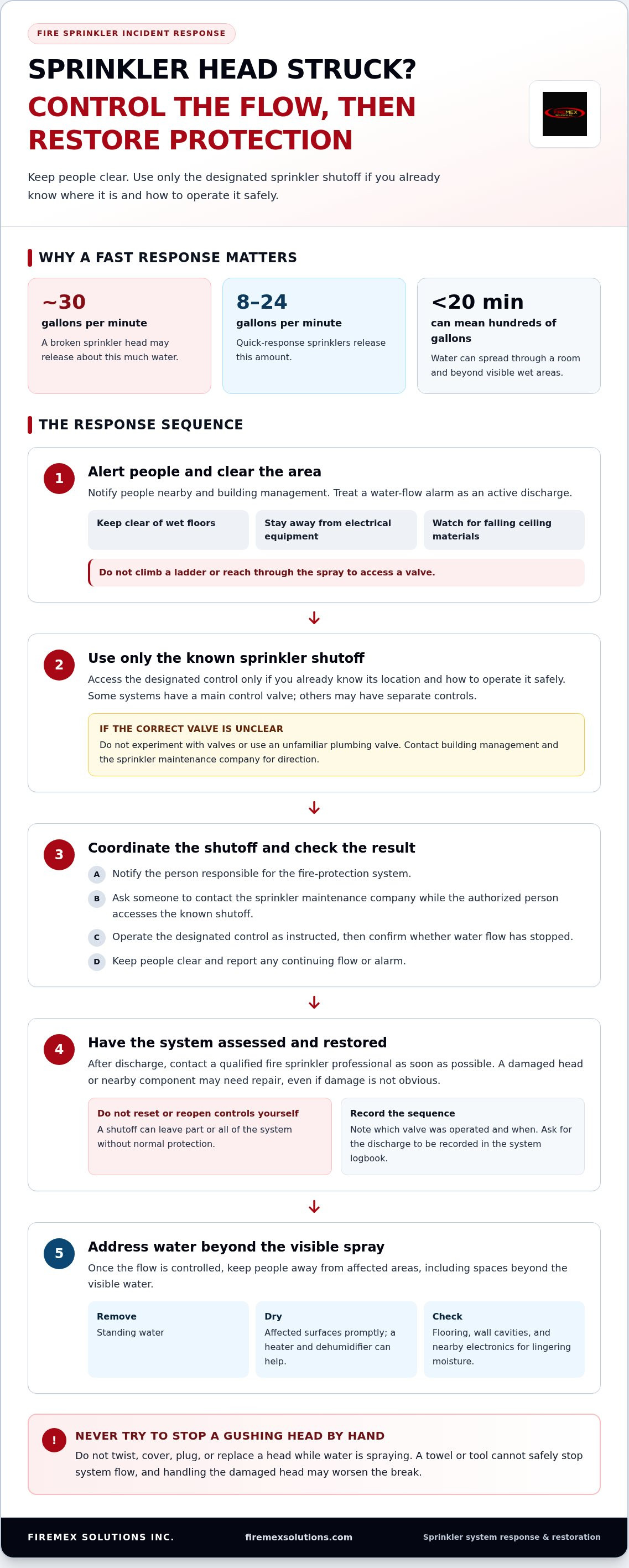
How to shut off water after accidentally breaking a sprinkler head
First, alert people nearby and contact building management. A damaged head can trigger a water-flow alarm, so treat the sound as an active system discharge. Keep clear of wet floors, electrical equipment, and falling ceiling materials. Don’t climb a ladder or reach through the spray to access a valve.
Locate the sprinkler system’s designated shutoff only if you already know where it is and how it operates. Property owners and building staff should learn its location before an emergency, rather than searching during a discharge. Some systems have a main control valve; others may have separate controls. Use only the identified sprinkler shutoff, not an unfamiliar plumbing valve.
Notify building management or the person responsible for the fire-protection system.
Ask someone to contact the sprinkler maintenance company while the authorized person accesses the known shutoff.
Operate the designated control as instructed, then confirm whether water flow has stopped.
Keep people away from the affected area and report any continuing flow or alarm.
Older systems may keep flowing until someone shuts off the water. A shutoff can also leave part or all of the fire sprinkler system without normal protection. Don’t reopen or reset controls yourself; have the system assessed and restored by a qualified professional. Record which valve was operated and when, so the responding technician can understand the sequence.
If you can’t identify the correct valve, don’t experiment. Contact building management and the sprinkler maintenance company for direction. For help addressing a damaged sprinkler and restoring system function, request professional sprinkler repair.
Firemex Solutions Inc.: Residential Fire Sprinkler Systems
Firemex Solutions Inc. provides Fire Sprinkler Repair for damaged heads and Residential Fire Sprinkler Systems for home protection. After a discharge, or an impact that leaves a head bent or leaking, professional assessment can identify damage that isn’t obvious and determine what repair is needed. Don’t put the system back into service based on appearance alone; a damaged component can affect its operation. Firemex Solutions Inc. also provides Fire Sprinkler Maintenance to address system condition beyond the immediate incident. If your home’s sprinkler head has been struck, damaged, or activated, contact Firemex Solutions Inc. to discuss the repair.
Be ready for the next step
Knowing what to do if you accidentally hit a sprinkler head can help you respond calmly, but the system also needs attention after the immediate incident. Make sure the person responsible for the property knows where the shutoff is and who handles sprinkler-system issues. A clear response plan can reduce confusion during a future leak or discharge.
For follow-up involving residential or commercial fire sprinkler systems, or underground fire service, Firemex Solutions Inc. can help address the system needs involved. The right next step is to explain what happened and which area or components were affected so the issue can be discussed clearly.
Contact Firemex Solutions Inc. for help with your sprinkler system and move forward with a clear plan.
Frequently Asked Questions
What happens if you hit a sprinkler head?
A hit can break a head’s heat-sensitive element and open its water valve, but impact doesn’t always cause immediate discharge. Even without visible water, a bent or displaced head may no longer be correctly positioned. For example, if a ladder clips a ceiling head and leaves it tilted, report the damage so the system can be assessed.
What are the risks of touching or capping a fire sprinkler head?
Touching or capping a head can worsen physical damage, cause a leak, or obstruct the sprinkler’s intended water distribution. A cap may also hide a damaged component rather than resolve the problem. Keep tools, tape, and other objects away, and report the condition so the head and nearby fittings can be inspected and the system’s protection maintained.
Comments