


How to Calculate the Costs and Returns of Fire Safety Systems in Belmont
Could an insurance discount change the financial case for fire protection? Automatic sprinkler systems may qualify for premium reductions, so property owners calculating ROI on fire safety systems in Belmont should consider potential insurance savings alongside estimated avoided losses. Comparing total benefits with total investment helps clarify the financial case without treating projected savings as guaranteed.
It’s understandable to want a clear financial case before investing in a safety program. Include installation and ongoing maintenance costs, and treat avoided damage and insurance savings as estimates. A practical approach to calculating ROI on fire safety systems in Belmont also accounts for how well the system is maintained and which benefits can be supported by records. This guide explains how to build the calculation, attribute savings conservatively, and assess whether maintained fire systems may affect premiums, while keeping protection for people and property at the center of the decision.
Table of Contents
Calculating return on investment for safety programs
Annual inspection and maintenance costs depend on system scope, equipment condition, site access, and required work. The price depends on the case and is given after a quote request; those factors shape the estimate. For calculating ROI on fire safety systems in Belmont, distinguish recurring upkeep from one-time project expenses.
For Belmont upgrades, count a tax incentive, rebate, or grant only when an active program applies to the property and project. Eligibility criteria determine whether that funding belongs in the calculation.
List the full investment. Include installation, inspections, maintenance, employee training, protective equipment, software, permit fees, and lost work time. Regulatory administration and safety certifications may also add costs. Separate one-time expenses from recurring program expenses to avoid understating the total cost.
Estimate benefits conservatively. The formula is (total benefits minus total investment) divided by total investment, multiplied by 100. Include avoided property loss, medical expenses, work interruptions, and absences only when supported by records. This makes calculating ROI on fire safety systems in Belmont more grounded in documented outcomes.
Measure maintenance performance. Track scheduled inspections completed, deficiencies found and resolved, repeat repairs, and system downtime. Compare these indicators across reporting periods. A rising number of repeat deficiencies, for example, can signal that repair or maintenance needs closer review.
Include training materials and time. Add course fees, materials, employee hours, and lost productivity to training costs. Compare those expenses with documented changes in incidents and absences.
There is no single typical annual cost: estimates vary with the system’s scope and condition, site access, and required work.
Attributing savings to interventions cautiously
Estimate fire-damage and downtime savings using documented incidents, repair losses, and interrupted operations. When calculating ROI on fire safety systems in Belmont, compare similar reporting periods and separate changes plausibly linked to an intervention from other factors.
List Potential Intervention SavingsIdentify savings tied to written safety plans, incident-tracking software, and EHS automation. A calculator may estimate that written safety plans save hundreds of hours, but value those hours using recorded labor costs, not assumed productivity gains. Treat the figure as an example, not a forecast for every workplace.Track employee injuries, incidents, absences, and related spending before and after changes. Avoid assigning every reduction to software or a plan: staffing changes and operational adjustments can also influence outcomes. Attribute only a conservative share of improvements in other departments to the intervention. This keeps ROI calculations for fire safety systems in Belmont grounded in evidence, not optimistic assumptions.
Estimate Damage and Downtime SavingsUse incident records to total fire-related property damage, repairs, cleanup, interrupted operations, and lost work. For each event, record downtime and its documented business impact. Compare the total with a similar period after the intervention, accounting for differences in site activity and incident severity. Don’t treat that example as a fire-loss estimate. If a reported reduction coincides with other major changes, isolate those influences before calculating savings. A maintenance facility, for instance, reduced staff by nearly 75 percent before an intervention’s injury outcomes were measured, complicating attribution.
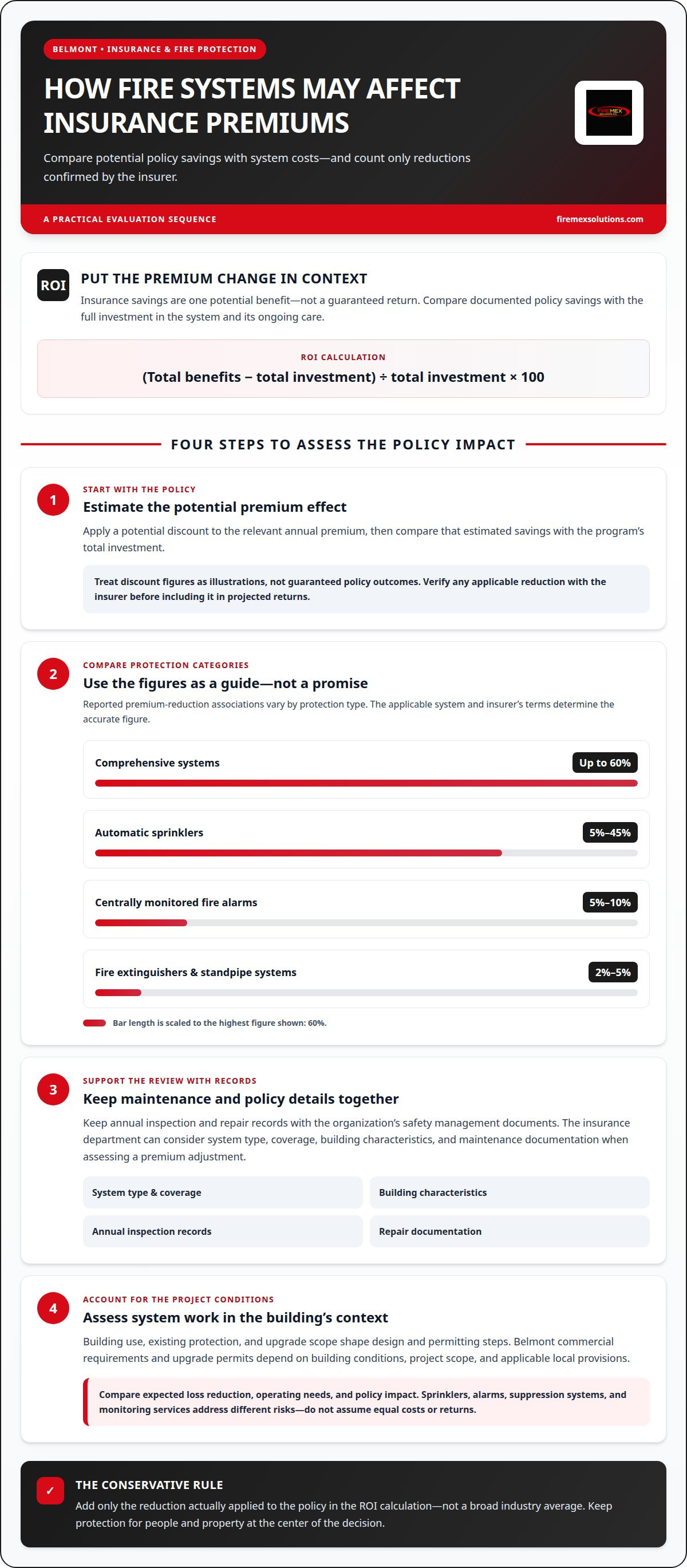
Insurance premium discounts for maintained fire systems
Insurance reductions differ by protection type: automatic sprinklers are associated with 5% to 45%, and comprehensive systems up to 60%. Belmont commercial requirements and upgrade permits depend on building conditions, project scope, and applicable local provisions.
Estimate the policy impact. Apply a potential discount to the relevant annual premium, then compare that savings with the program’s total investment. These are illustrations, not guaranteed policy outcomes.
Compare protection categories. Centrally monitored fire alarms are associated with 5% to 10% premium reductions; fire extinguishers and standpipe systems, 2% to 5%. Sprinklers, alarms, suppression systems, and monitoring services address different risks, so compare their expected loss reduction, operating needs, and policy impact rather than assuming equal costs or returns. The applicable system and insurer’s terms determine the accurate figure.
Include maintenance and policy details. Keep annual inspection and repair records with the organization’s safety management documents. The insurance department can use system type, coverage, building characteristics, and maintenance documentation when assessing a premium adjustment. Add only the reduction actually applied to the policy in the ROI calculation, not a broad industry average.
Plan the system work. Building use, existing protection, and upgrade scope shape design and permitting steps. A documented fire sprinkler maintenance review can help identify system condition and maintenance needs before evaluating potential insurance savings.
Treat this as an illustration, and verify any applicable reduction with the insurer before including it in projected returns.
Firemex Solutions
Firemex Solutions Inc. helps property owners connect fire protection needs with practical investment decisions. For a new project, Fire Sprinkler System Design helps define the system scope; residential and commercial sprinkler systems serve different building uses. Underground Fire Service may also be relevant when planning fire service infrastructure.
Turn to Firemex Solutions Inc. when assessing a sprinkler project, planning an upgrade, or considering how system design and maintenance fit into long-term costs. A clear project scope helps evaluate the investment alongside potential loss prevention and any insurance savings that may apply. Firemex Solutions Inc. also provides fire sprinkler repair and maintenance for existing systems, helping you account for ongoing care.
Make the Next Fire-Safety Decision With Confidence
A useful ROI estimate can guide the next conversation, but its value comes from connecting the financial model to a system suited to the property. As building needs change, revisit the assumptions behind the estimate and keep protection, maintenance, and operating continuity in view. This makes calculating ROI on fire safety systems in Belmont a practical part of ongoing property planning, not just a one-time calculation.
Firemex Solutions works with property owners on residential and commercial fire sprinkler systems, as well as underground fire service. If you’re weighing a project or planning an upgrade, discuss how the system scope aligns with your building and investment priorities. Contact Firemex Solutions to talk through your fire protection needs and take a considered next step.
Frequently Asked Questions
How do fire insurance premiums change after installing fire sprinklers or alarms?
Installing sprinklers or alarms can qualify a property for a lower premium when the insurer’s underwriting credits that protection. The adjustment depends on factors such as the building’s insured use, system type, maintained condition, and policy terms. For a Belmont property, keep installation and maintenance records together so the protection can be assessed at renewal.
What risks and assumptions should be included in a fire safety system ROI calculation?
Include potential property damage, recovery time, business interruption, and the cost of restoring normal operations. Distinguish expenses directly tied to a fire from projected losses that might be avoided. For example, a warehouse and an occupied residential building have different contents, schedules, and disruption impacts. State assumptions about occupancy, operating hours, and recovery duration, then avoid counting the same loss twice.
Comments